System Operational Effectiveness:
A Practical Approach
Course Design
The course is self-led and self-paced, offering a modular e-learning experience. It’s system-generic and designed for learners of all abilities, delivering easy-to-learn lessons in modules. This allows learners to complete the course over time rather than committing to continuous study.

Learn by Doing
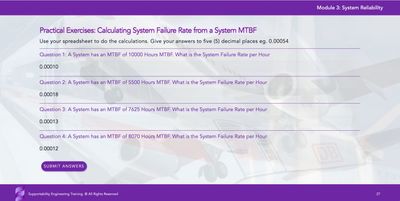
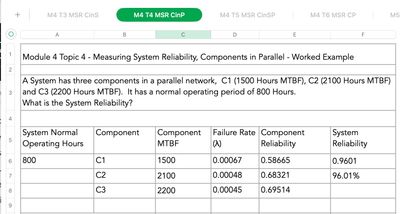
Learning by doing is central to this course. They learn through worked examples, step-by-step methods, “how to” demonstrations and practical exercises. Learners are encouraged to create their own course notes and use spreadsheets for calculations and measurements.
Consolidate Knowledge by Quizzing
Each module includes a quiz, all of which are “open book”. This allows learners to use their notes and spreadsheet data to answer questions and reinforce their learning. The course concludes with a final quiz covering all course subjects.

Course Prerequisites
Course prerequisites include competence in the rules of ordering in mathematics (BODMAS or PEMDAS). However, the worked examples, step-by-step methods and “how to” demonstrations make the course accessible to learners of all abilities. Learners will also need to be proficient in using the basic functions of a Microsoft Excel or Apple Numbers spreadsheet.
Learning Management System
The course System Operational Effectiveness: A Practical Approach is hosted on a Learning Management System (LMS) and accessed using an encrypted User ID and password.
The LMS focuses on tracking learning progress by capturing learner engagement and training performance data. It highlights learner experience analytics to monitor individual development. The LMS can produce periodic reports and analysis for organisations that include:
- Automatically collating learning data into visual charts
- Providing periodic high-level summaries of performance and completion data
- Allowing organisations to track progress and structured workforce training paths
- Tracking individual learner performance throughout the course